info@safarihq.com
+61 420 442 509 | +255 767 829 590
info@safarihq.com
+61 420 442 509 | +255 767 829 590
Shira Route – High-Altitude Western Approach Across the Shira Plateau on Mount Kilimanjaro
The Shira Route on Mount Kilimanjaro is a spectacular high-altitude approach that crosses the vast Shira Plateau from the western side of the mountain. Starting at a higher trailhead than most routes, the Shira Route Kilimanjaro climb quickly leaves the rainforest behind and takes you straight into open heath and alpine terrain, with wide horizons, big skies and dramatic views of Kibo’s ice-capped summit from day one.
Often considered a quieter, more remote alternative to the Lemosho Route, the Shira Route traverses iconic landmarks such as Shira 1 Camp, Shira 2 Camp and Moir Hut, with impressive views of Shira Cathedral and the surrounding volcanic landscape. From the plateau, the trail links into the scenic Southern Circuit via Lava Tower, Barranco Camp, Karanga Camp and Barafu Camp, before the final push to Uhuru Peak, Africa’s highest point. Because it starts at a higher elevation, the Shira Plateau route is best suited to trekkers with good fitness and some prior high-altitude experience, rewarding them with quieter trails, early big-mountain views and excellent acclimatisation opportunities.
Key Highlights – Shira Route Kilimanjaro
Classic western approach for a more remote, less-crowded Kilimanjaro experience
Immediate access to the high Shira Plateau, with big views from the very start
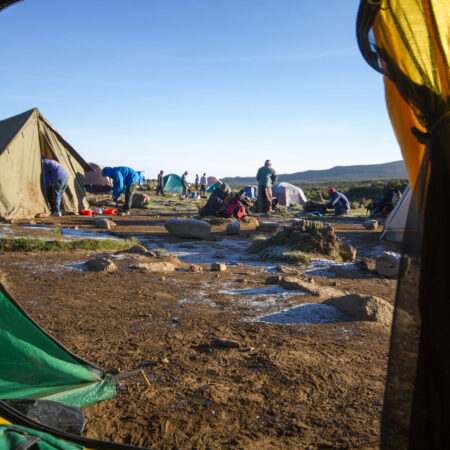
Scenic camps at Shira 1, Shira 2 and Moir Hut, ideal for acclimatisation hikes
Dramatic vistas of Shira Cathedral, Kibo summit and the surrounding volcanic ridges
Follows the beautiful Southern Circuit via Lava Tower, Barranco, Karanga and Barafu
Excellent “climb high, sleep low” opportunities for better altitude acclimatisation
Combines alpine desert landscapes with classic summit night to Uhuru Peak (5,895 m)
Ideal for trekkers seeking a quieter Kilimanjaro route with strong acclimatisation profile and big-mountain atmosphere from day one
Day 1: Shira Gate to Shira Camp 1
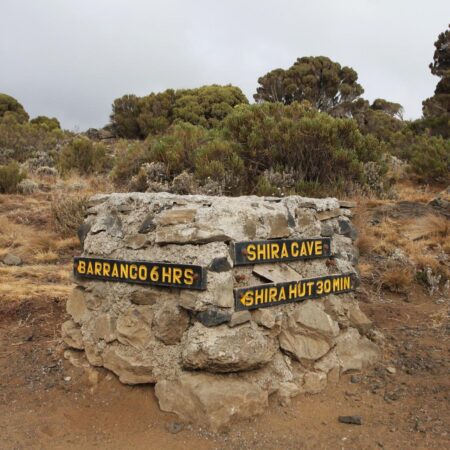
After breakfast, transfer along logging roads to Shira Gate, passing by small wooden houses of forestry workers and large colonial farms producing beans, coffee, and vegetables typical of West Kilimanjaro. Upon arrival at the gate, complete the necessary formalities before beginning the hike. The trail ascends through lush rainforest, offering a captivating environment filled with the sounds of chattering birds and playful monkeys. A packed lunch is provided along the way. The area is home to a variety of wildlife, including buffalo, so an armed park ranger will accompany the group for safety. The day’s trek leads to Shira Camp 1, located in the center of the Shira Plateau at an altitude of 3,500 metres.
Walking time: 6-8 hours.
Day 2: Shira Camp 1 to Shira Camp 2
This day is designed to aid acclimatization while allowing trekkers to explore the scenic Shira Plateau. The route takes you through grassy moorland and past striking volcanic rock formations, providing an opportunity to take in the unique landscape. Along the way, the trek leads to the summit of Shira Cathedral (3,750 metres), a massive rock buttress surrounded by steep spires and pinnacles, offering dramatic views of the surrounding wilderness. The atmosphere is one of isolation and raw beauty, especially as the afternoon mists begin to roll in, adding an air of mystery. Continuing on, you’ll arrive at Shira Camp 2, located near Shira Hut at 3,840 metres. From here, enjoy breathtaking views of Mount Meru, which appears to float above the clouds, creating an unforgettable sight.
Walking time: 4-5 hours.
Highlights:
Exploration of the Shira Plateau’s grassy moorland and volcanic rock formations
Summit of Shira Cathedral with dramatic views of the surrounding wilderness
Spectacular views of Mount Meru floating above the clouds from Shira Camp 2
A perfect day for acclimatization and absorbing the stunning landscape
Day 3: Shira Camp 2 to Moir Hut
In the morning, begin by following the main trail up to Lava Tower, a striking volcanic formation at 4,500 metres that offers panoramic views of the surrounding terrain. As you ascend, you’ll be treated to breathtaking views of the Shira Plateau and the surrounding valleys. For those feeling strong and well-acclimatized, there’s the option to climb to the ruined hut at Arrow Glacier (4,800 metres), where you’ll experience a more challenging ascent and stunning vistas of the glaciers and summit. Afterward, continue from Lava Tower toward Moir Hut (4,200 metres), a quieter and more serene campsite nestled at the foot of the Kibo massif. The day’s trek offers spectacular views of the rocky landscape and a sense of isolation, making it a memorable part of the journey.
Walking time: 5-7 hours.
Highlights:
Lava Tower’s striking volcanic rock formations and panoramic views
Optional climb to Arrow Glacier with stunning vistas of glaciers and summit
Peaceful Moir Hut campsite with a sense of isolation and beautiful surroundings
Diverse landscapes, from volcanic rocks to alpine deserts
Day 4: Moir Camp to Pofu Camp
Today’s trek begins with a climb out of the Moir Valley, followed by a short detour to the summit of Little Lent Hill at 4,375 metres. From here, take in panoramic views of the surrounding landscape, with sweeping vistas of the mountain and valleys. After enjoying the view, descend back to the main trail and continue eastward along the northern circuit. The route passes through a field of rock slabs that make a distinctive clinking sound as they are walked upon, adding a unique auditory element to the hike. The trail then undulates through the high-altitude terrain until you reach Buffalo Camp, located at 4,150 metres. At this campsite, you’ll feel a true sense of space as the expansive Kenyan plains stretch out far below to the north, offering one of the most dramatic and peaceful settings on the trek.
Walking time: 4-7 hours.
Highlights:
Summit of Little Lent Hill (4,375m) with stunning panoramic views of the landscape
Unique field of clinking rock slabs that add an interesting auditory experience to the trek
Undulating terrain offering sweeping vistas of the mountain
Arrival at Buffalo Camp with expansive views over the Kenyan plains stretching far to the north
A sense of vastness and tranquility, perfect for acclimatization and reflection
Day 5: Pofu Camp to Third Cave Camp
Starting from Buffalo Camp, today’s trek begins with a climb up to the top of ‘Buffalo Ridge,’ offering stunning views of the surrounding terrain. After reaching the ridge, descend to the other side, passing a small spring and some sparse vegetation before continuing eastwards. As you move further along, the landscape becomes more arid, with fewer signs of plant life. The terrain gradually opens up, revealing the harsh beauty of the high-altitude environment. Eventually, the trail leads to Third Cave Camp, located at 3,900 metres. The camp is nestled in a serene spot, surrounded by the vast, open landscape, providing an excellent place for rest and acclimatization.
Walking time: 5-7 hours.
Highlights:
Climb to the top of ‘Buffalo Ridge’ with panoramic views of the surrounding landscapes
Scenic descent from the ridge, passing a small spring and sparse vegetation
Transition from lush vegetation to more arid, high-altitude terrain
Arrival at Third Cave Camp (3,900m), a peaceful and open campsite ideal for acclimatization
A day of solitude and awe-inspiring wilderness, perfect for appreciating the mountain’s raw beauty
Day 6: Third Cave Camp to School Hut Campsite
Today’s trek begins with a steady ascent as you make your way towards The Saddle, a unique and barren lunar landscape nestled between the towering peaks of Kibo and Mawenzi. As you traverse this surreal terrain, you’ll be surrounded by the vast, rocky expanse, providing a truly otherworldly experience. Continuing upwards, you’ll reach School Hut Campsite (4,700 metres) in the early afternoon. This campsite is located just below the towering Kibo, offering excellent views and a sense of calm before the summit push. After arriving at camp, spend the rest of the afternoon resting and preparing for the final ascent to the summit the following day.
Walking time: 4-5 hours.
Highlights:
Steady ascent to The Saddle, a barren, lunar landscape between Kibo and Mawenzi
Surreal, rocky terrain with expansive views of both Kibo and Mawenzi
Arrival at School Hut Campsite (4,700m), nestled in a prime location for summit preparation
A restful afternoon to prepare physically and mentally for the challenging summit day ahead.
Day 7: School Hut Camp to Uhuru Peak (5,896m) to Millennium Camp
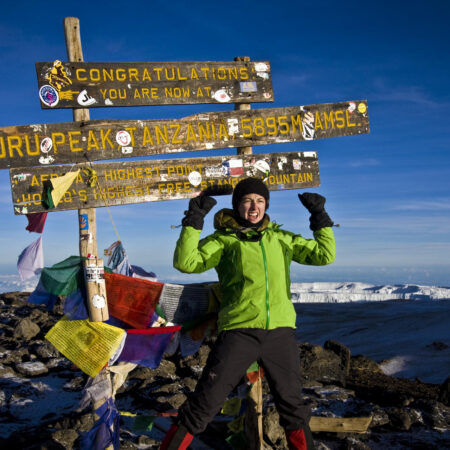
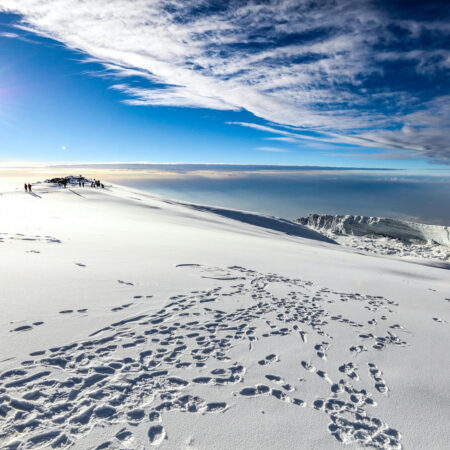
The final and most challenging day begins with an early start, around midnight, as you begin the ascent to Uhuru Peak. The trail takes you through steep volcanic scree, where the climb is demanding but well-graded with zig-zag switchbacks to help manage the pace. After approximately 5-6 hours of steady climbing, you’ll reach Gilmans Point (5,685m), located on the Crater Rim. Take a short break to catch your breath and enjoy the stunning sunrise over Mawenzi Peak. From here, continue along the Crater Rim to Uhuru Peak (5,896m), the highest point in Africa. The route takes you past spectacular glaciers and ice cliffs, adding to the dramatic beauty of the summit area. After reaching the summit, you’ll retrace your steps back to Stella Point and then descend through Barafu Camp (4,600m), before continuing down to Millennium Camp (3,800m). The descent is long, but the satisfaction of having reached the summit is unmatched. After a full day of trekking, enjoy a well-deserved rest at Millennium Camp, surrounded by the tranquility of the mountain.
Walking time: 12-16 hours.
Highlights:
Midnight ascent through volcanic scree with well-graded switchbacks
Stunning sunrise over Mawenzi Peak at Gilmans Point
Panoramic views and close encounters with glaciers and ice cliffs on the way to Uhuru Peak
Reaching the highest point in Africa, Uhuru Peak (5,896m)
A rewarding descent through Barafu Camp and down to Millennium Camp
The sense of achievement and celebration after completing the summit journey.
Day 8: Millennium Camp to Mweka Gate to Kilimanjaro International Airport
The final day of the trek begins with a sustained descent along a well-constructed path that takes you through lush tropical forest, alive with the sounds of birdsong and surrounded by vibrant undergrowth and a variety of botanical wonders. As you make your way down, the scenery gradually changes from alpine meadows to rich, green rainforest. The trail leads to the Mweka Gate (1,650m), where you’ll sign out from the national park. From there, continue your descent for another 15 minutes through scenic coffee and banana farms, eventually reaching Mweka Village. Here, a vehicle will be waiting to transfer you either to your hotel or to Kilimanjaro International Airport for your onward flight. After an extraordinary journey, you’ll leave with unforgettable memories of Africa’s highest peak.
Walking time: 4-6 hours.
Highlights:
Beautiful descent through tropical forest with birdlife and diverse plant species
Sign-out at Mweka Gate, marking the end of your trekking adventure
Walk through picturesque coffee and banana farms on the final stretch
A smooth transfer to your hotel or Kilimanjaro International Airport for your departure
A sense of accomplishment and the peaceful final moments after a challenging and rewarding journey.


Ut enim ad minim veniam, quis nostrud exercitation ullamco laboris nisi ut aliquip ex ea commodo consequat. Duis aute irure dolor in reprehenderit in