info@safarihq.com
+61 420 442 509 | +255 767 829 590
info@safarihq.com
+61 420 442 509 | +255 767 829 590
6-Day Rongai Route – Quiet Northern Approach to the Summit of Mount Kilimanjaro
The 6-Day Rongai Route trek on Mount Kilimanjaro is ideal for trekkers who want a quieter, more peaceful path to the Roof of Africa. Approaching from the northeastern side of Kilimanjaro, close to the Kenyan border, this route offers big open views, a gentle gradient and far fewer crowds than the busy southern trails. With its gradual ascent profile and well-paced itinerary, the Rongai Route is a smart choice if you’re looking to improve your chances of a successful summit while enjoying a calmer, more remote feel.
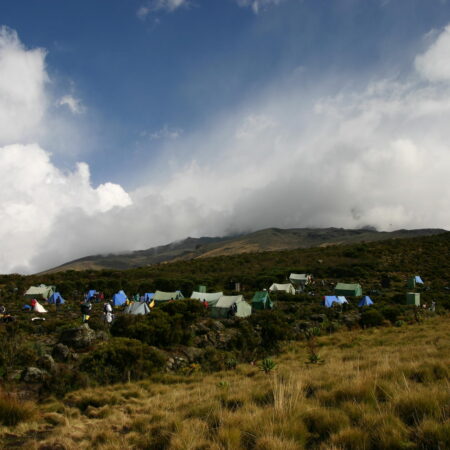
Unlike the more popular Machame and Marangu Routes, the Rongai Route takes you through serene mountain forest, quiet moorland and stark alpine desert, with expansive vistas towards Kenya and the sweeping plains below. The 6-day itinerary provides enough time to gain height steadily, helping your body adjust to the altitude and contributing to a higher summit success rate than shorter, steeper climbs.
As a northern-facing route, Rongai enjoys some of the best weather windows on Kilimanjaro, particularly from June to October and December to March, when the skies are often clearer and rainfall is generally lower than on the southern slopes. If you’re looking for a scenic, less-crowded and well-paced Kilimanjaro trek, the 6-Day Rongai Route delivers an unforgettable journey to Uhuru Peak with a welcome sense of space and tranquillity.
Key Highlights – 6-Day Rongai Route, Kilimanjaro
Quiet northern approach with far fewer crowds than Machame and Marangu
6-day itinerary with a gradual ascent, supporting better acclimatisation
Trek through varied landscapes: forest, heath, moorland and alpine desert
Big open views towards Kenya and the northern plains of Kilimanjaro
Generally drier, clearer conditions from June–October and December–March
Higher summit success potential than many shorter, steeper routes
Ideal for trekkers seeking a peaceful, well-paced Kilimanjaro experience
Classic summit attempt to Uhuru Peak (5,895 m) via the Kibo crater rim
Day 1: Marangu Gate to First Cave Camp
Elevation: 1,860 meters to 2,700 meters
Trekking Time: 4-5 hours
Habitat: Montane Fores
Your Kilimanjaro adventure begins at the Marangu Gate, where you’ll complete your park registration before heading into the lush montane rainforest. The path is relatively gentle, with a steady ascent through the tropical forest, accompanied by the sounds of birds, monkeys, and the occasional rustle of animals in the trees.
As you trek through the forest, the air will become cooler, and the environment will shift from dense green undergrowth to towering trees, moss-covered branches, and beautiful ferns. The forest is a haven for wildlife, so keep your eyes peeled for small creatures like the endemic Kilimanjaro turaco, and the famous black-and-white colobus monkeys.
After around 4 to 5 hours of walking, you’ll arrive at First Cave Camp (2,700 meters). This camp offers a perfect place to rest and take in the beauty of the surrounding forests. The atmosphere here is peaceful, and the cool mountain air provides an ideal setting for a restful night in preparation for the days ahead.
Highlights of the Day:
Trek through the beautiful montane rainforest, filled with diverse plant life and wildlife.
Hear the sounds of the forest as you pass through dense greenery, with towering trees and lush ferns.
Enjoy the peaceful First Cave Camp, a great spot to rest and acclimatize before the higher altitudes.
Start to notice the elevation gain and get a feel for the rhythm of your climb.
Day 2: First Cave to Kikelewa Caves
Elevation: 2,700 meters to 3,600 meters
Trekking Time: 5-6 hours
Habitat: Montane Forest to Moorland
After a restful night at First Cave Camp, you’ll begin your second day on Mount Kilimanjaro with a hearty breakfast. The trek today takes you from the dense rainforest into the moorland zone, where the landscape begins to change dramatically. You’ll notice the lush green forest gradually giving way to more open terrain, with rolling hills, heath, and shrubs becoming more prominent.
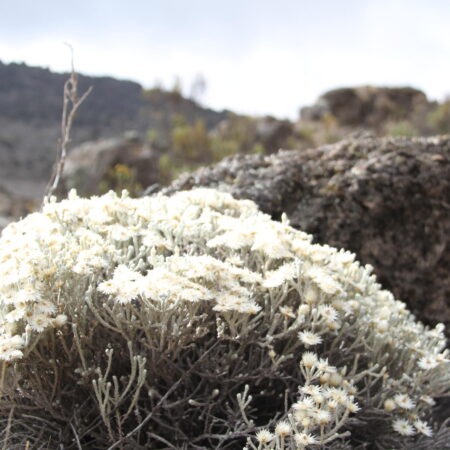
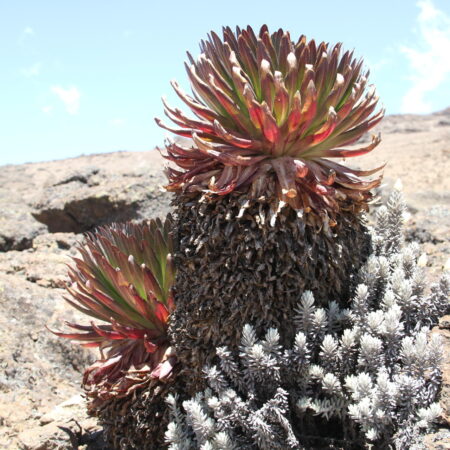
As you ascend, the trail is steady and provides magnificent views of the surrounding areas. The higher you climb, the more you’ll see the striking landscape of Kilimanjaro’s southern slopes, with spectacular views across the valleys and plains below. Keep an eye out for interesting plant species, such as the giant groundsels and other hardy plants that thrive in these higher altitudes.
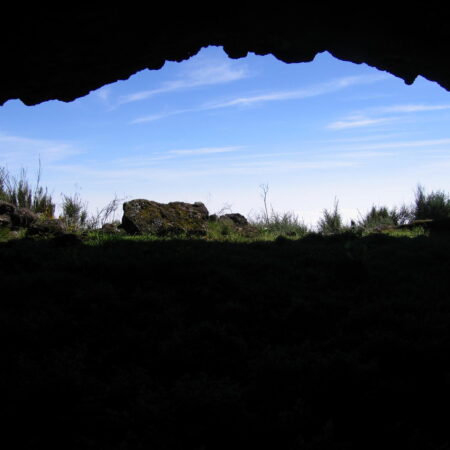
After about 5 to 6 hours of trekking, you’ll reach Kikelewa Caves (3,600 meters), a unique camp nestled at the edge of the moorland. The camp provides a serene spot to relax and acclimatize, surrounded by the quiet and beauty of the mountain. From here, you can enjoy incredible views of the landscape, with the majestic Kibo Peak visible in the distance, and the atmosphere is peaceful, perfect for winding down after a day of trekking.
The altitude gain today helps your body adjust to the increasing height, so be sure to take it “pole pole” (slowly, slowly) and drink plenty of water to aid in acclimatization.
Highlights of the Day:
Trek through the beautiful transition from rainforest to moorland, offering a change of scenery and more open views.
Spot unique giant groundsels and other high-altitude plants.
Enjoy sweeping views of the surrounding valleys, plains, and the ever-looming Kibo Peak.
Relax at Kikelewa Caves Camp, a quiet and beautiful resting point at 3,600 meters.
Day 3: Kikelewa Caves to Mawenzi Tarn Camp
Elevation: 3,600 meters to 4,330 meters
Trekking Time: 4-5 hours
Habitat: Moorland to Alpine Desert
After a restful night at Kikelewa Caves, you’ll start your day with a hearty breakfast, ready to tackle the next leg of your Kilimanjaro adventure. Today’s trek is a steady ascent that will take you into the alpine desert zone, where the landscape becomes more rugged and stark. The terrain is rocky, with little vegetation, and the air will feel noticeably thinner as you continue to gain altitude.
The trail begins with a gradual climb through moorland, offering incredible views of the surrounding valleys, with Mawenzi Peak looming closer as you get higher. The route is relatively straightforward but requires steady pacing to allow your body to adjust to the increasing altitude.
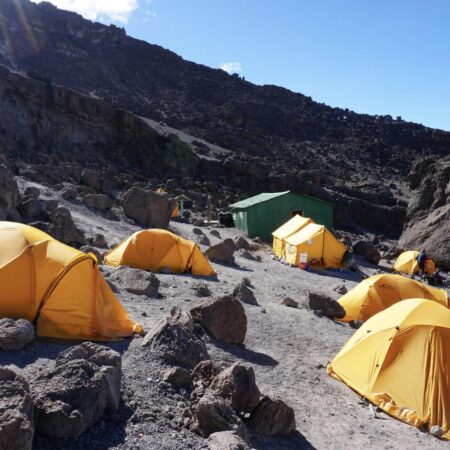
As you continue, the landscape transforms into a more barren alpine desert, with volcanic rocks and dust surrounding you. The climate here is harsh and dry, but the breathtaking views make it all worth it. You’ll pass through rocky outcrops and enjoy panoramic vistas of the surrounding area.
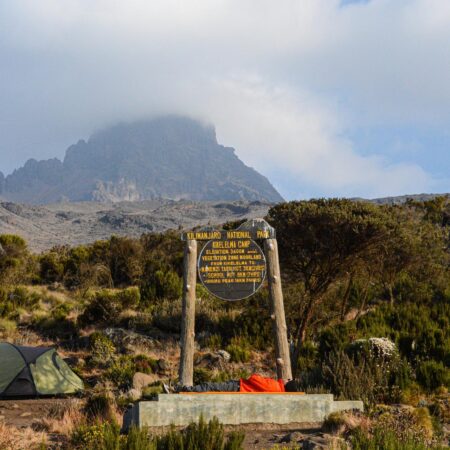
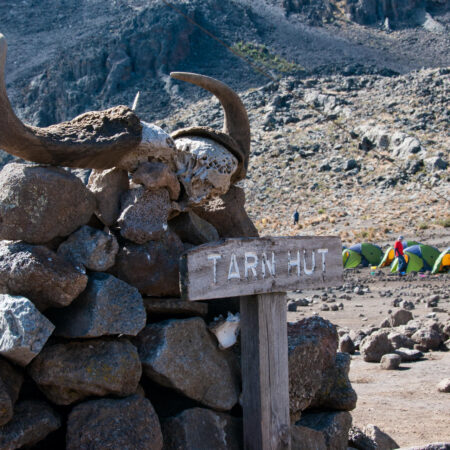
After approximately 4-5 hours of trekking, you’ll arrive at Mawenzi Tarn Camp (4,330 meters), located in a spectacular spot at the base of Mawenzi Peak. The camp is set near a small tarn (lake), and you’ll be able to take in incredible views of the towering Mawenzi Crater and the jagged peaks of Mawenzi. The atmosphere here is peaceful and offers a chance to relax and acclimatize.
At Mawenzi Tarn, you will have the opportunity to rest and explore the surrounding area. If you’re feeling up for it, a short acclimatization hike to a higher point nearby will further assist in your body’s adjustment to the altitude. Remember, the key to success on Kilimanjaro is to take it “pole pole” (slowly, slowly) and drink plenty of water to stay hydrated and aid acclimatization.
Highlights of the Day:
Transition into the alpine desert zone, where the scenery becomes more dramatic with volcanic rocks and arid landscapes.
Get closer views of Mawenzi Peak, one of Kilimanjaro’s distinctive volcanic peaks.
Arrive at Mawenzi Tarn Camp, a tranquil spot offering stunning views of Mawenzi Crater and the surrounding terrain.
Option for an acclimatization hike to assist with adjusting to the altitude.
Day 4: Mawenzi Tarn Camp to School Hut
Elevation: 4,330 meters to 4,780 meters
Trekking Time: 5-6 hours
Habitat: Alpine Desert
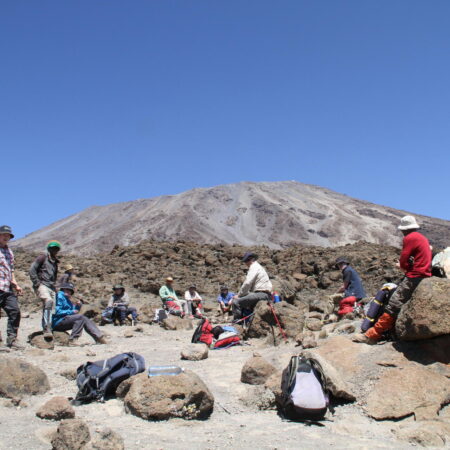
After a peaceful night at Mawenzi Tarn Camp, you’ll begin the next stage of your Kilimanjaro journey. Today’s trek will take you through the alpine desert zone, where the terrain continues to be rugged and barren, with vast volcanic landscapes and striking views of Mawenzi Peak.
The trail begins with a steady ascent, moving through rocky terrain and sparse vegetation. As you hike, you’ll enjoy panoramic views of the Mawenzi Crater and the surrounding valleys. The air at this altitude is thinner, so it’s important to maintain a slow, steady pace, allowing your body to adjust to the elevation. Taking it “pole pole” (slowly, slowly) will help you maintain energy and avoid altitude sickness.
Along the way, you’ll get closer to Mawenzi Peak, which towers over the landscape. The stark beauty of the alpine desert, combined with the jagged, volcanic rock formations, makes for an awe-inspiring backdrop. As you continue, the environment becomes increasingly barren, with only the hardiest of plants managing to survive at this elevation.
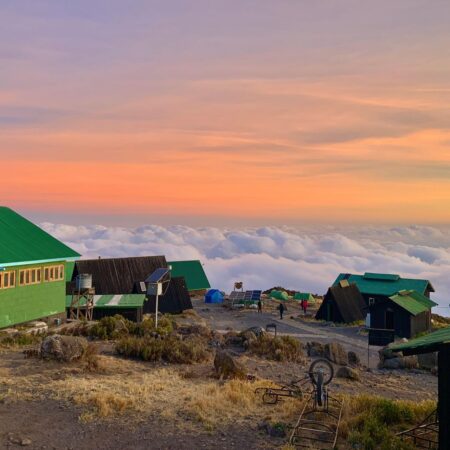
After 5-6 hours of trekking, you’ll arrive at School Hut (4,780 meters). This camp is located just below Kibo Peak, the highest point on Kilimanjaro. School Hut is a popular base for climbers preparing for the summit, and it offers stunning views of the surrounding terrain, with Kibo Peak looming in the distance.
School Hut is a small, high-altitude camp where you can rest and prepare for the final push to the summit. The location offers an excellent opportunity for acclimatization, and if you’re feeling up to it, a short acclimatization hike around the area can help prepare your body for the upcoming days.
Highlights of the Day:
Trek through the alpine desert zone, a barren and dramatic landscape with volcanic rocks and minimal vegetation.
Enjoy close-up views of Mawenzi Peak as you approach School Hut.
Arrive at School Hut, an important base for summit climbers, offering great views of Kibo Peak and the surrounding valleys.
Opportunity to acclimatize with a short hike or rest before the final ascent.
Day 5: School Hut to Uhuru Peak to Horombo Camp
Elevation: 4,780 meters (School Hut) to 5,895 meters (Uhuru Peak) to 3,720 meters (Horombo Camp)
Trekking Time: 12-14 hours
Habitat: Arctic to Moorland
This is the big day—the summit day! After an early wake-up call, you’ll begin your final ascent to Uhuru Peak, the highest point on Mount Kilimanjaro and the Roof of Africa. The journey to the summit is demanding but immensely rewarding. Starting in the darkness of the early morning, you’ll hike through the Arctic Zone, where the terrain is rocky and the air is thin.
Summit Ascent:
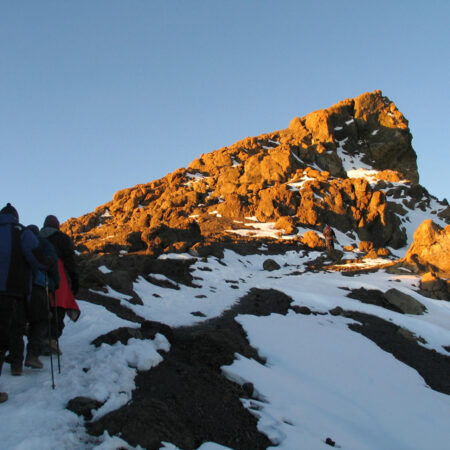
The trek begins with a steep climb toward Gilmans Point (5,681 meters), located on the crater rim. The first few hours are challenging, with a mix of scree and rocky paths. You’ll be trekking through icy conditions, so it’s important to wear warm, layered clothing to protect yourself from the cold. The ascent is gradual, but the altitude will make it feel much tougher. Remember to take breaks, hydrate, and maintain a slow pace to allow your body to adjust to the thinner air.
Reach Uhuru Peak:
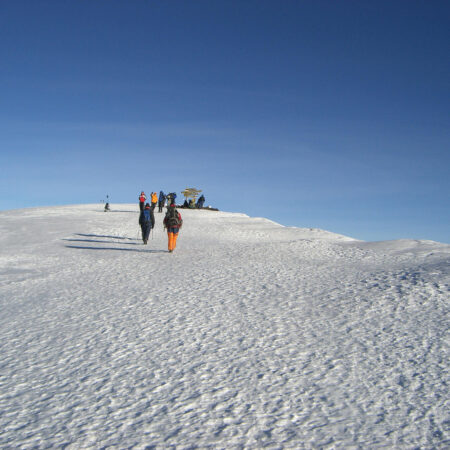
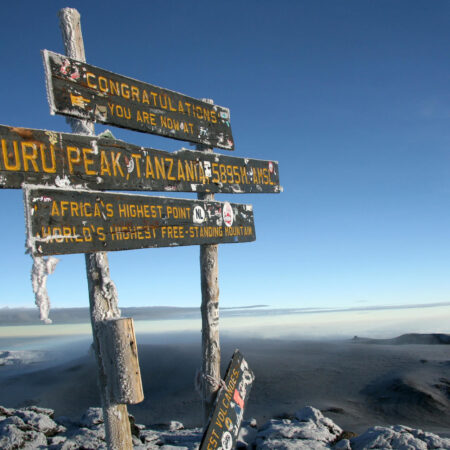
After several hours of climbing, you’ll reach Gilmans Point, where you’ll get your first glimpse of the crater and the breathtaking views of the surrounding glaciers. From here, it’s a shorter, but still strenuous, trek to Uhuru Peak (5,895 meters), where you’ll finally stand at the summit of Mount Kilimanjaro. It’s a momentous achievement—congratulations! Take in the incredible views of the Kilimanjaro Crater, the glaciers, and the vast African plains below.
At the summit, you’ll have time for photos, celebration, and reflection before beginning your descent.
Descent to Horombo Camp:
After reaching Uhuru Peak, the descent begins, and you’ll head back toward Horombo Camp. The journey down takes you through the Arctic Zone and then into the Moorland Zone, where the temperatures are warmer. The steep descent can be hard on the knees, so trekking poles are highly recommended. You’ll pass through Kibo Hut and continue on the trail that leads you to Horombo Camp, your final resting place for the day.
After completing the summit, the descent feels easier, but it’s still important to stay focused and take your time as you make your way back down. Upon arrival at Horombo Camp, you’ll be greeted by a warm atmosphere and a chance to relax after an incredibly strenuous day. Your body will thank you for the rest, and you’ll have time to reflect on your incredible achievement.
Highlights of the Day:
Summit the Roof of Africa at Uhuru Peak (5,895 meters), the highest point on Mount Kilimanjaro.
Breathtaking views of the Kilimanjaro Crater, glaciers, and the African savannah below.
Memorable celebration at the summit, with photos to mark this once-in-a-lifetime achievement.
Descend to Horombo Camp through the varying landscapes of the Arctic and Moorland Zones, allowing you to soak in the beauty of Kilimanjaro from different perspectives.
Day 6: Horombo Hut to Marangu Gate
Elevation: 3,720 meters (Horombo Hut) to 1,830 meters (Marangu Gate)
Trekking Time: 5-6 hours
Habitat: Moorland to Rainforest
On Day 6, you’ll begin your final descent from Horombo Hut to Marangu Gate, completing your incredible journey on Mount Kilimanjaro. After a hearty breakfast, you’ll start your trek downhill through the lush rainforest zone, a sharp contrast to the dry alpine environment you’ve experienced so far.
As you make your way down, the trail winds through the vibrant Moorland Zone, where the terrain is much easier to navigate. The air is more oxygen-rich, making breathing easier and helping to relieve the fatigue you may have felt during your ascent.
The trail continues to descend steadily, transitioning from the moorland into a dense rainforest, where you’ll be surrounded by towering trees, ferns, and colorful flora. The sound of birds chirping and the occasional glimpse of monkeys in the trees makes the descent pleasant and scenic.
After about 5-6 hours of trekking, you’ll finally arrive at Marangu Gate (1,830 meters), where your adventure comes to an official end. Here, you’ll sign out and receive your summit certificate, a well-deserved memento of your achievement for successfully reaching Uhuru Peak.
Your guide will organize your transportation back to Marangu Village, where you can either head directly to Arusha or enjoy a celebratory lunch before being transferred back to Salinero Kilimanjaro Hotel for a well-earned rest and reflection on your journey.
Highlights of the Day:
Descend through the lush rainforest zone, experiencing a change in scenery and vegetation.
Marangu Gate finish, where you’ll officially end your trek and receive your summit certificate.
Congratulations on completing your Kilimanjaro adventure! You’ve conquered one of the Seven Summits and can now reflect on the unforgettable memories made throughout the trek.


Ut enim ad minim veniam, quis nostrud exercitation ullamco laboris nisi ut aliquip ex ea commodo consequat. Duis aute irure dolor in reprehenderit in